
#LCSM Chat Topic 7/13: Balancing Connection to Others in the Cancer Community with the Risk of Loss
 Jack West, MD
My father, now a retired radiologist, provided the first characterization of medical oncologists I ever heard, describing them as “the coldest people I ever met.” Thankfully, I’ve had the opportunity to work with, and I hope become, a caring and empathetic medical oncologist, but I think his perception comes from the resignation many oncologists have historically felt when so many patients die despite our best efforts. Oncologists, cancer surgeons, and other health care professionals have long struggled with the hope of developing and maintaining a relationship with their patients who may do well but who, all too often, eventually succumb to cancer.
Today, #LCSM is one of many online communities, which enable people from all over to share experiences, helpful suggestions, hopes, and fears together. We celebrate the value of these connections, helping people navigate the uncertainty of a new diagnosis and the start of a treatment, letting people share a “happy dance” triggered by positive scans, but also leaving people feeling the sharp loss when others in the community experience a clinical decline. The grief of learning that a beloved longtime member of an online community has died is often every bit as acute as the loss of a friend or family member “in real life.” Here is the dark counterpoint to the deep positive connections we can develop and share in online cancer communities.
For this week’s #LCSM chat, we’ll reflect on the losses many have felt recently as longtime members have passed and consider if there is any “right” way to share a relationship with someone with cancer, whether in person or in an online context, without being devastated by the potential loss of that valued connection. Whether physician, nurse, patient, or caregiver, we all face this challenge, so we will address the following questions together:
1) Are there ways to honor loved connections, including in online communities, without becoming overwhelmed w/grief? #LCSM
2) If a member of online community dies, is the sense of loss a necessary complication of strong online relationship? #LCSM
3) If many dealing w/death regularly learn to cope by developing emotional distance, should those in online communities want this? #LCSM
4) How much empathy should a #cancer pt & their physician share? Should there be professional distance in therapeutic relationship? #LCSM
5) What techniques do you use to manage the emotions generated by deaths of #lungcancer patients you know? #LCSM
Please join us for our next #LCSM chat on Thursday, July 13th, at 8 PM Eastern, 5 PM Pacific, to take the time to reflect on how we can best cope with losses of those we have come to care about, including in the relatively new capacity of participating together in an online community.
#LCSM Chat Topic 6/29: When Doctors Disagree
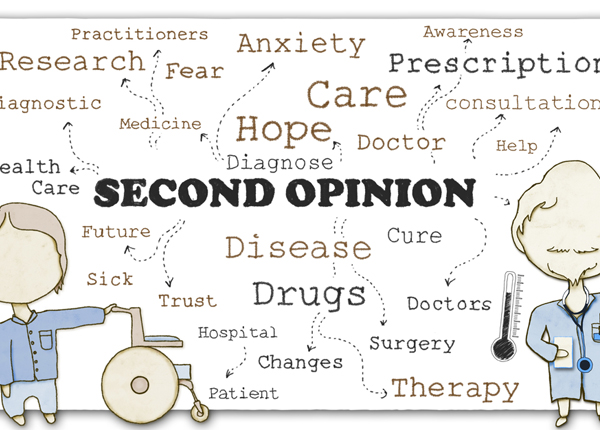
Increasingly, the care of lung cancer patients has become a multi-doctor, multi-disciplinary job. Gone are the days (thankfully!) when a paternalistic doctor prescribed a treatment plan that was unquestioned by the patient. The internet and ease of travel have allowed unprecedented access to information and to physicians. As more treatment options and strategies become available for lung cancer patients, it is inevitable that they will be faced with differing opinions from their physicians with regard to how to personalize their care. Examples are plentiful, such as decisions between surgery or radiation therapy for early stage lung cancer, recommendations for chemotherapy or immunotherapy for advanced cancer, or even decisions whether to treat some patients at all. While lung cancer patients and their doctors would like to think that such important decisions should always be guided by obvious evidence based medicine, the reality is that clinical trials cannot address every individual patient scenario or keep up with the pace of medicine today. And without doubt, many physicians have their own biases towards different treatment strategies. How then, should a patient deal with differing opinions? Are there warning flags? Are there important questions to ask when this situation arises?
With that in mind, we will cover the following topics and questions:
T1: What are common scenarios in which you have seen lung cancer doctors disagree?
T2: When getting a 2nd opinion, should the new Dr. be given the opinion of the first before developing his/her own treatment plan?
T3: What questions should you ask a doctor who disagrees with another doctor about your treatment?
T4: What resources can patients use to share in their own decision making if different treatment options exist?
Please join the #LCSM community and moderator @BrendonStilesMD for our next #LCSM Chat on Thursday, June 29th, at 8 pm Eastern Time (5 pm Pacific). Although #LCSM Chat focuses on lung cancer, this scenario arises across all fields of medicine. As such, we would love to have other patients, advocacy groups, and physicians participate. Please join us! If you’re new to tweet chats, read a primer on participating in the chat here.
#LCSM Chat Topic 6/15: Patient Reported Outcomes (PROs)—more effective than some approved cancer drugs for advanced disease

With the proliferation of smartphones and personal tracking devices (such as Fitbits), technology has the means for cancer patients to provide feedback to their healthcare providers about their symptoms and side effects of treatment. Such feedback is called “patient reported outcomes,” or PROs. However, PROs are difficult to measure in a consistent manner, and thus far have not been incorporated into many cancer center clinics or clinical trials.
But times are changing. One of the big news items to come out of the huge American Society of Clinical Oncology (ASCO) Annual Meeting this month was a study of a web-based system that enabled cancer patients to self-report their symptoms. In this study, patients who used the tool reported weekly on 12 common symptoms experienced during chemotherapy (among them appetite loss, difficulty breathing, fatigue, hot flashes, nausea, and pain), and graded them on a five-point scale. This web-based tool actually helped patients live longer. The increased survival benefit (five months) was better than the survival benefits offered by many new cancer drugs submitted to the FDA for approval.
Patient reported outcomes as quality measures are of interest to major cancer organizations. The US Food and Drug Administration had issued guidance for industry regarding patient-reported outcome measures, and the National Cancer Institute has developed a standardized measurement system for patient reported outcomes. ASCO has a PRO committee that is developing and testing PRO measures.
On June 15 at 8 pm Eastern Daylight Time (5 pm Pacific), #LCSM Chat will discuss patient reported outcomes and how they might help improve treatment outcomes as well as clinical trials. Moderator Janet Freeman-Daily @JFreemanDaily will lead our chat using the following topic questions:
- T1: What patient-reported outcome measures would be most valuable to patients during treatment?
- T2: What technologies would be most effective for communicating and capturing patient reported outcomes in cancer?
- T3: What patient-reported outcomes would be meaningful to patients when evaluating treatment options and related quality of life?
- T4: How can we make patient-reported outcomes measurable–how to measure level of nausea? Neuropathy? Breathing difficulty?
- T5: What patient-reported outcomes be valuable in studies of cancer care and survivorship?
If you’re new to tweet chats, check out this handy primer.
References:
- Web-Based System for Self-Reporting Symptoms Helps Patients Live Longer (ASCO 2017 abstract)
- Guidance for Industry Patient-Reported Outcome Measures: Use in Medical Product Development to Support Labeling Claims (US Food and Drug Administration)
- Patient-Reported Outcomes version of the Common Terminology Criteria for Adverse Events (PRO-CTCAE™) (National Cancer Institute)
- The Rise of Patient-Reported Outcomes in Oncology (ASCO)
- Implementing Patient-Reported Outcome Measures (Partners HealthCare)
 #LCSM
#LCSM 
You must be logged in to post a comment.